
Fixtures · 6 min read
Toilet Keeps Running in Your Broward Home? Flapper, Fill Valve, or the Water Itself
A running toilet in a Broward home is almost always one of three parts, and Broward's hard, chlorinated water wears out two of them faster than the manual expects. Here is how to find which one in five minutes, and when a new toilet is the honest answer.
By The God Plumber · Florida plumbers, in business since 2015 · Published · Updated
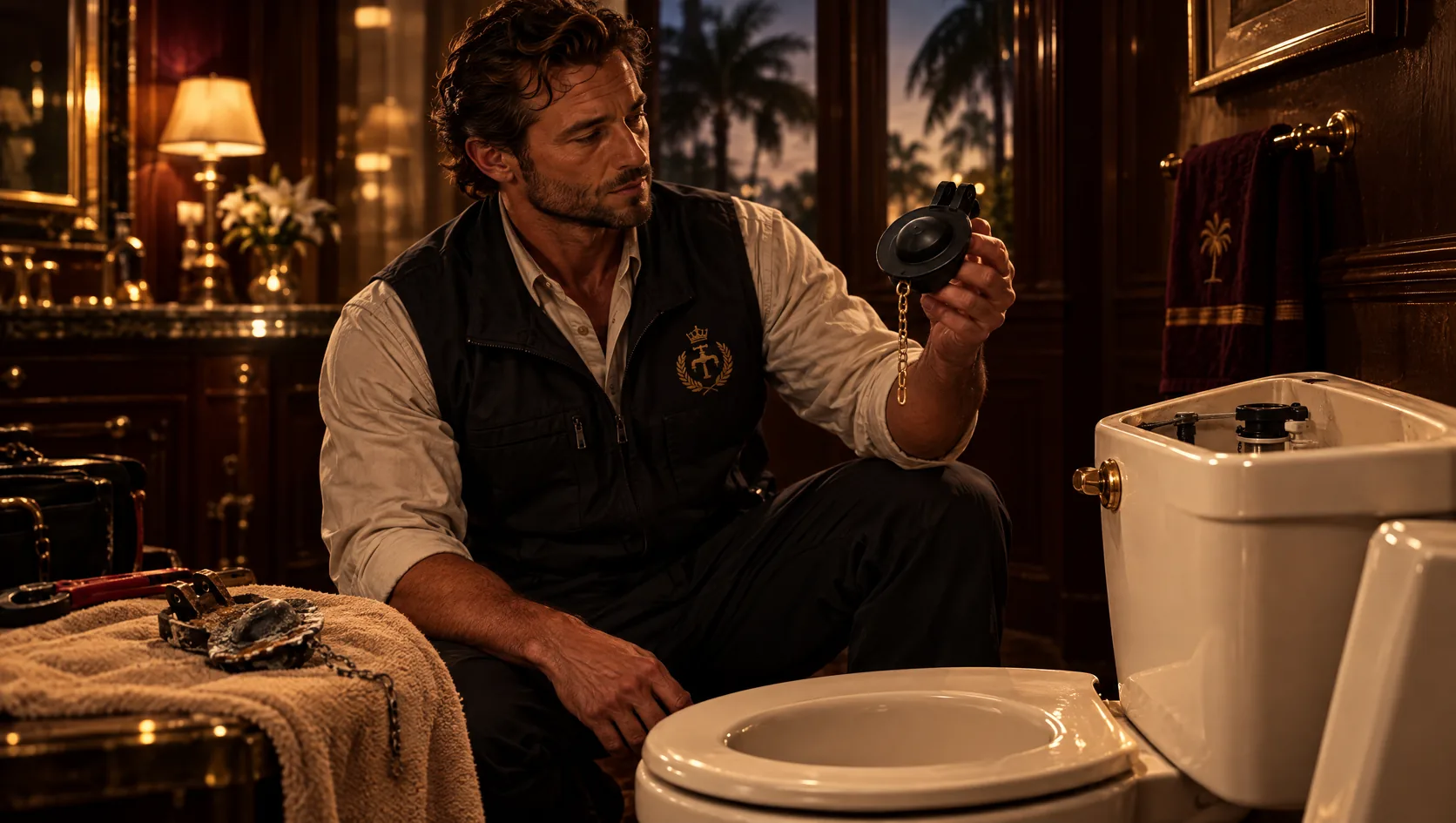
A toilet that keeps running in a Broward County home is nearly always one of three things: a flapper that no longer seals against the flush valve, a fill valve that is set too high or has failed, or a cracked overflow tube inside the tank. The flapper is the most common by a wide margin. Broward's municipal water is hard — it comes from the Biscayne aquifer through limestone — and it is treated with chlorine-based disinfectant, and between the mineral scale on the seat and the disinfectant stiffening the rubber, a flapper here often fails years before the same part would in a soft-water city. A few drops of food coloring in the tank tells you in ten minutes whether that is your problem.
The reason this matters beyond the noise is water. A toilet that runs, or one that refills itself every twenty minutes with nobody in the room — plumbers call that ghost flushing — is passing water from the tank into the bowl and down the drain around the clock. Across Cooper City, Davie, Pembroke Pines, Plantation and the rest of Broward, it is one of the most common reasons a water bill climbs with no visible leak anywhere in the house.
How do I find out why my toilet is running?
Lift the tank lid and work through these in order. Each one takes a minute or two and needs no tools:
- Look at the water level. It should sit below the top of the overflow tube — the open vertical pipe in the middle of the tank. If water is trickling into that tube, the fill valve is set too high or is not shutting off. Adjust the float down and see if it stops.
- Do the dye test. Put several drops of food coloring in the tank, do not flush, and wait ten to fifteen minutes. Color in the bowl means water is passing the flapper, which is the most common cause in Broward.
- Check the flapper chain. Too short and it holds the flapper open a crack; too long and it can catch under the flapper. There should be a little slack and no more.
- Press down on the flapper with the water on. If the running stops, the flapper or the seat under it is worn, warped, or scaled.
- Run a finger along the flush valve seat once the tank is drained. A rough, crusty ring is mineral scale — the flapper cannot seal against it no matter how new the flapper is.
- Look at the overflow tube for a hairline crack below the waterline. It is rare, but it mimics a bad flapper and a new flapper will not fix it.
If the dye test is positive, replace the flapper before anything else. It is the least expensive part in the tank. Bring the old one to the store — flappers are not universal, and a mismatched one is the usual reason a toilet keeps running after the flapper has already been changed.
Why do flappers and fill valves fail faster in Broward?
Two properties of the water. The first is hardness: Broward's supply carries dissolved calcium and magnesium from the limestone aquifer, and every flush leaves a trace on the flush valve seat. Over a few years the seat develops a rough ring that a soft rubber flapper cannot seal against, and the same scale builds inside the fill valve until its seal weeps or the float sticks. The second is disinfection. Municipal water in South Florida is treated with chlorine-based disinfectant, and rubber that sits in it constantly hardens, curls at the edge, and loses the flexibility it needs to seal. Drop-in tank tablets make that far worse; they are the quickest way to destroy a flapper and the gaskets around it.
Water pressure plays a part too. Many Broward homes have no pressure-reducing valve at the meter, and higher-than-necessary pressure makes a fill valve work harder, chatter, and fail sooner. If fill valves in the house seem to need replacing often, or the toilet hisses long after it has refilled, pressure is worth checking before the next part goes in.
Is it worth repairing an older toilet or replacing it?
Repair, if the bowl and tank are sound and the toilet is a modern water-efficient model. A new flapper, fill valve and flush valve — a full rebuild — costs a fraction of a new toilet and gives an otherwise healthy fixture years more service. Replacement makes sense in three situations: a hairline crack anywhere in the porcelain, a toilet that has been rebuilt before and is running again, or a toilet old enough to use several times the water of a current model. Plenty of Broward homes from the 1970s and 80s still have their original toilets, and on those the water savings alone can justify a new one, quite apart from the running.
What does a plumber do that a new flapper does not?
- Cleans or replaces the flush valve seat, so the new flapper actually has a smooth surface to seal against.
- Replaces the fill valve with the correct height and adjusts it to the tank's marked waterline rather than guessing.
- Checks the tank-to-bowl gasket and bolts, which are often the next thing to weep on a toilet old enough to need a flapper.
- Tests the shut-off valve behind the toilet, which in older Broward homes is frequently seized — a running toilet is the wrong time to discover that.
- Measures the house water pressure and tells you honestly whether it is contributing.
How do I keep a Broward toilet from running again?
Skip the tank tablets entirely. Clean the flush valve seat with a non-scratch pad when you change a flapper, so the scale does not build up under the new one. Match the flapper to the toilet rather than buying a universal one. And if the house has original supply valves and no pressure regulator, have those looked at once — a home with reasonable pressure and quarter-turn stops needs its toilets touched far less often.
If a toilet in your Broward home is still running after a new flapper, or you would rather have the whole tank rebuilt properly in one visit, call the South Florida line at 954-594-1666 or book a visit for a time that suits you. We will tell you whether it is a rebuild or a replacement, and the price goes in writing before we start.